© 2026 Rentokil Initial plc and subject to the conditions in the legal statement..
How a people-first approach, continuous improvement, and Steritech partnership helped Kwik Trip become the first convenience store to earn the International Association for Food Protection's Black Pearl Award.
Food safety excellence isn't built through a single audit, policy, or inspection. It's built over time through thousands of everyday decisions, a commitment to continuous improvement, and a culture where every coworker understands their role in protecting the people they serve.
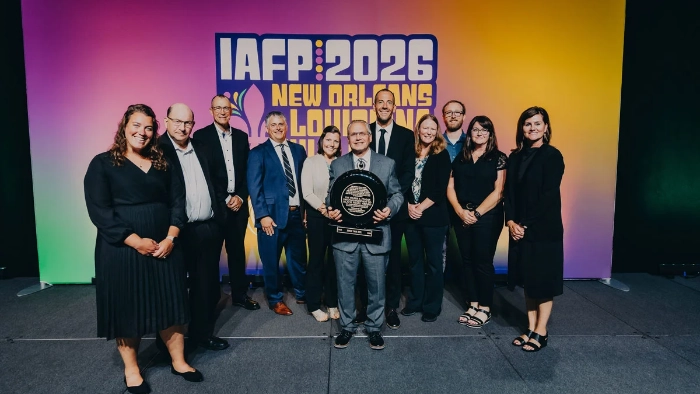
That philosophy has guided Kwik Trip's approach to food safety for decades. In 2026, it earned the family-owned convenience retailer one of the industry's highest honors: the International Association for Food Protection's (IAFP) Black Pearl Award. Presented annually to just one organization worldwide, the award recognizes excellence in food safety and quality through employee education, operational excellence, consumer programs, and a demonstrated commitment to advancing food protection. With its selection, Kwik Trip became the first convenience store to receive the distinction.
For many organizations, an achievement like that might represent the finish line. At Kwik Trip, it represents something different.
The Black Pearl Award wasn't the result of one successful initiative or a standout audit. It was the culmination of years spent investing in people, adapting alongside a growing business, measuring performance, and continuously raising the bar.
While every organization's food safety journey is different, the principles behind Kwik Trip's success offer valuable lessons for organizations committed to building a stronger food safety culture.
To understand why Kwik Trip became the first convenience store to earn food safety's highest honor, you have to look beyond the award itself. You have to look at the culture that made it possible.
Building a People-First Food Safety Culture
At Kwik Trip, food safety has never been viewed as the responsibility of one department. It’s a shared responsibility that begins with people and extends throughout the organization. That philosophy, reinforced over time, became the foundation for the company's Black Pearl Award. "Winning the 2026 Black Pearl Award is a significant achievement for Kwik Trip, and it reflects the commitment and hard work of our coworkers," said Scott Zietlow, President and CEO of Kwik Trip.
For Angie Ames, Food Protection Analyst at Kwik Trip, that commitment became increasingly important as the company expanded its food service program.
"When we started to expand the food service program, we realized that culture could either be our biggest strength or our biggest risk," Ames said. "We believe that if you invest in your people, they believe in what they do, and their behaviors reflect that, that naturally bleeds into food safety culture."
Rather than relying solely on policies, procedures, or inspections, Kwik Trip focused on helping coworkers understand not only what to do, but why it matters. The company believes lasting food safety performance depends on coworkers who understand the purpose behind their work and take ownership of protecting guests.
As the company expanded, the Food Protection team also wanted to understand whether its culture was evolving alongside the business. A food safety culture survey measured whether coworkers felt empowered to speak up, understood expectations, and believed food safety messaging was effective. Over time, the results have shown consistent improvement, reinforcing that the company's investment in people is translating into stronger food safety performance.
Culture becomes meaningful only when coworkers feel empowered to act.
"It's coworkers who really understand what they're doing and know when something goes wrong, they can stop the line," Ames said. "We don't want them to wait for a leader to speak up."
That philosophy extends well beyond the Food Protection team. Although the department is intentionally small, responsibility for food safety is shared across the organization. Coworkers in production, distribution, transportation, retail operations, and support functions all play a role in identifying risks, improving processes, and protecting guests every day.
The approach is rooted in Kwik Trip's mission of serving customers and communities by treating customers, coworkers, and suppliers as the company would want to be treated while making a positive difference in people's lives. According to Ames, that philosophy naturally extends to food safety.
"If you have people that already believe in that mission, they're going to be very successful with food safety."
At Kwik Trip, food safety isn't a program that operates alongside the business. It is part of how the business operates.
That culture would soon be tested as the business itself began to evolve.
Growing Alongside the Business
When Ames joined Kwik Trip nearly 25 years ago, convenience store food offerings looked very different than they do today.
"We had hot dogs on a roller grill and a piece of pizza circling around the warmer," she recalled.
Today, Kwik Trip is known for fresh sandwiches, take-home meals, fried chicken, bakery products, dairy items, and an expanding menu of prepared foods. Behind the scenes, the company has also built a vertically integrated food system that includes production facilities, distribution centers, transportation, retail operations, and an A2LA-accredited Food Protection Laboratory. That level of vertical integration gives Kwik Trip greater visibility and control over food safety throughout the supply chain, from production to the point of sale.
Growth, however, brings new complexity. Every new product, process, or service changes the risk profile of the business.
"When we rolled out our fresh meat program, we asked ourselves, 'How do we control cross-contamination in the store?' We had to build a program around that," Ames said. "Then, when we rolled out our fresh case program, we asked, 'How do we make sure those products are continuously temperature monitored so we don't create a food safety hazard?'"
Rather than applying the same food safety approach to every initiative, the company treated each expansion as an opportunity to reassess its programs. New products required new risk assessments, updated procedures, additional coworker training, and more targeted monitoring. As the business evolved, the food safety program evolved alongside it. "Our program continued to evolve based on risk," Ames said. "Every new product and new type of meal solution for our guests required a risk assessment, strengthening of our programs, additional training for our coworkers, and more monitoring on our audits."
That mindset has allowed Kwik Trip to continue innovating without compromising its standards. Rather than viewing food safety as a barrier to growth, the company has made it an integral part of how growth is planned and executed.
"The evolution has been constant," Ames said. "Every new product brings new challenges and new learning opportunities."
Continuous Improvement as a Mindset
Building a strong food safety culture was only the beginning. Sustaining it required something more: a commitment to continuous improvement.
As Kwik Trip grew, so did the complexity of its food safety program. Success depended not only on strong processes, but on a mindset that assumes there is always another opportunity to learn, strengthen, and improve.
For Kwik Trip, that philosophy is built on a simple principle: hold yourself to a higher standard than anyone else will.
"We always want to be tougher on ourselves than a health inspector is," Ames said. "We want to find things on an audit or just on the daily job and correct them so that the health inspector doesn't have an opportunity to find it first."
That philosophy requires a willingness to acknowledge that even high-performing organizations have room to improve. Rather than viewing audits as a measure of success or failure, Kwik Trip treats them as opportunities to learn. Internal audit results are evaluated alongside coworker engagement surveys, food safety culture surveys, guest feedback, regulatory inspections, and other operational metrics to identify trends, uncover emerging risks, and determine where additional training or support may be needed before issues escalate.
That commitment extends beyond the organization itself. Kwik Trip also looks to trusted external partners like Steritech to provide independent perspectives that complement its internal programs and help identify additional opportunities for improvement.
For Ames, the objective isn't to achieve perfect inspection scores. It's to ensure the organization is identifying more opportunities for improvement than regulators ever need to.
"We know our audits are working because we are finding and identifying opportunities," Ames said. "We always want to have more things identified than a health inspection."
For many organizations, finding fewer issues feels like success. At Kwik Trip, success means finding more of them first. That's the mindset that keeps continuous improvement truly continuous.
Raising the Bar Together
Organizations that achieve excellence rarely do it alone. They seek outside perspectives, challenge their own assumptions, and recognize that collaboration often leads to stronger outcomes than working in isolation.
For Kwik Trip, that philosophy has become an essential part of its approach to continuous improvement. The company believes stronger food safety programs are built through collaboration, transparency, and a willingness to learn from others, both inside and outside the organization.
That mindset is reflected in the way Kwik Trip approaches its audit program. Rather than relying on a single team or perspective, the company intentionally combines evaluations from its Food Service District Leaders, third party Steritech auditors, and regulatory inspections. Each provides a different lens through which to view operational performance.
"Different eyes bring different perspectives and different observations," Ames said. "Then you look at the data and say, 'All right, what are our riskiest items?' Then we can work on that. We can build training programs around that."
That same colaborative approach has shaped Kwik Trip's long-standing partnership with Steritech. "One thing that I appreciate about Steritech is you're willing to grow with us as an organization," Ames said. "Kwik Trip is very good at finding partners that are going to be with us for the long haul, be adaptable, and help us manage risk as we evolve."
One recent initiative brought regulatory inspection data and internal audit findings together within a single system, giving the Food Protection team a clearer picture of performance trends and helping identify opportunities for improvement earlier.
That willingness to learn from others extends well beyond Kwik Trip's own operations.
Each September, during National Food Safety Month, the company hosts its annual Food Protection In-Service, inviting suppliers, regulatory agencies, academic institutions, industry organizations, and business partners to spend two days learning together. The event includes educational sessions, facility tours, and discussions designed to strengthen relationships while encouraging the open exchange of ideas. "The goal was to encourage our suppliers and our other business partners to build positive and professional relationships, get to know their regulators, because we think that's where it's at. It's learning from one another," Ames said.
Perhaps the most telling example of Kwik Trip's philosophy is who receives an invitation.
"We will invite other convenience stores to come join us at the in-service because our goal is to raise the bar for the industry," Ames said. If we have safer suppliers and safer retailers, it’s going to be a safer food system for all."
For Ames, the reason is simple.
"Food safety is not a competitive advantage."
That belief may be the clearest explanation for why Kwik Trip earned the Black Pearl Award. The company isn't focused solely on improving its own operations. It is equally committed to helping strengthen the broader food safety community. Because when one organization raises the bar, the entire industry benefits.
Looking Beyond the Black Pearl Award
For Kwik Trip, the Black Pearl Award represents an extraordinary achievement, but not a finish line.
Throughout its journey, the company has viewed food safety as something that must be earned every day through its people, its operating philosophy, and its commitment to continuous improvement. The award recognizes decades of investment in those principles, but it also reinforces the responsibility to keep improving.
"We've been very cognizant not to acquire the 'we've arrived' syndrome," Ames said. "This award is really a line in the sand. It celebrates everything we've accomplished over the last 25 years, but we're already asking, 'What does the future hold?'"
That perspective may be the most meaningful lesson from Kwik Trip's story.
Award-winning food safety programs aren't built by chasing recognition. They're built by creating a culture where every coworker understands their role, every new challenge is met with thoughtful risk assessment, every audit becomes an opportunity to improve, and every partnership helps raise the standard for the entire industry.
The Black Pearl Award recognizes what Kwik Trip has built. Its mindset of continuous learning, humility, and improvement is what wil shape what comes next.
For food safety leaders, that's perhaps the most important takeaway. excellence isn't a destination. It's the result of countless decisions made every day by people who are committed to doing the right thing, even when no one is watching.
Because in food safety, excellence isn't something you achieve once. It's something you choose every day.
*Data presented is gathered by Steritech through its OnBrand360®
Contact Steritech for a free survey or quote and obtain our experts will get back to you as soon as we can
Gain helpful insight from Steritech’s library of industry info and resources.